



*FRSC calls for caution as Dangote Group keep mum
*Many Nigerian companies would have closed down in the UK for misusing drivers, says a UK-based Nigerian
With the nation struggling with insecurity that has claimed the lives of tens of thousands in the last five years, the country is also battling with truck drivers who have sent hundreds to their early graves.
With multiple deaths recorded monthly, less attention seems to be paid to the menace, and prosecution has also not been secured effectively, especially in the case of those under the influence.
Like a daily ritual, before launching on the road, many drivers who drink stop by the roadside or spend time at parks to consume the amount to their satisfaction. Those who smoke are armed with different kinds that last for the journey.
Those who do drugs are said to consume without fear of being arrested or the negative effects.
They handle the steering and drive in an intimidating manner, sending a sense of panic down the spines of both motorists and pedestrians. These drivers mostly pay little attention to road signs or traffic rules.
Within seven days, three accidents involving trucks were recorded in Edo State alone.
On August 13, 2025, Ruth Otabor, the sister of Big Brother Naija Season 7 winner, Ijeoma Otabor, popularly known as Phyna, underwent a leg amputation after being hit by a Dangote Group truck near Auchi Polytechnic, Edo State, just six days after she graduated from Auchi Polytechnic.
According to eyewitnesses, the heavy-duty truck crushed her leg before it was eventually chased down and stopped by a bystander.
Reacting to the development, Dangote Group pledged to offer full support, including comprehensive medical care and appropriate compensation, in line with the company’s policy.
On Sunday, August 17, 2025, three persons were killed in Auchi, Edo State, when two trucks, one belonging to Dangote Cement, another unidentified truck, and a GLK Benz were involved in an accident in front of the Omega Fire Ministry at about midday.
The Dangote truck crushed about five vehicles in front of the church, and three people died in the process.
On Monday, August 18, 2025, another truck accident happened in Ikpoba Slope, Ikpoba-Okha, Edo State, leaving six persons in critical condition.
For years, trucks have veered off the road, ending lives and crumbling businesses without compensation.
Some of the cases have been linked to not only truck drivers being under the influence but also sleeping on the steering wheel due to the number of hours on the road. Many of them only know when to be on the road, but not when to stop.
In Nigeria, the road haulage industry is often less regulated, and there’s less enforcement of rest. This can result in longer working hours for drivers, more dangerous road conditions, and potentially more accidents.
While the Dangote group is not the owner of all the trucks on the Nigerian roads, the company arguably has the largest fleet. Dangote Group operates a fleet of over 5,000 trucks for cement distribution. In addition, they are in the process of deploying 4,000 Compressed Natural Gas (CNG) trucks for fuel distribution. This brings the total number of trucks owned and operated by Dangote to over 9,000.
While it’s difficult to pinpoint one specific individual or company as the absolute highest truck owner in Nigeria due to varying ownership structures and a lack of public data, the Dangote Group is widely known for having a massive truck fleet, primarily for its logistics and transportation needs related to its various businesses, particularly in cement and other commodities. Additionally, large transport companies such as ABC Transport and GUO Transport, while not solely focused on trucks, also operate significant fleets of trucks for cargo and logistics, while the BUA Group has 700 trucks dedicated to cement distribution.
The company is not solely responsible for the number of deaths caused by trucks, it’s alleged that its trucks have been involved in 318 accidents involving 2,607 persons and resulting in 1,040 injuries and 393 deaths between 2015 and 2025.
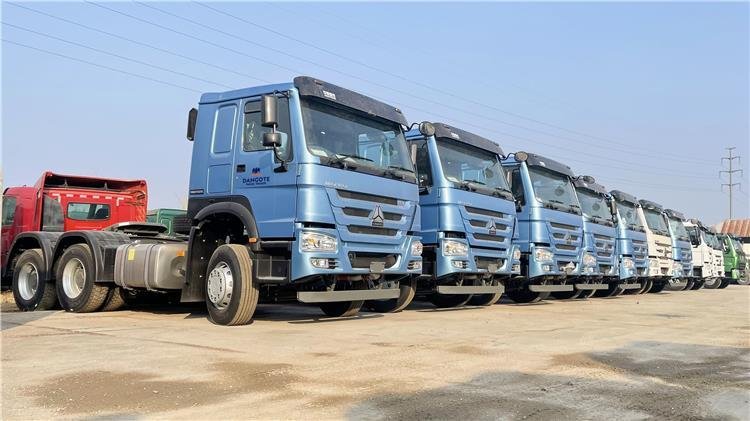
The Guardian reached out to the Dangote Group Communication team, but no response. An email was also sent to communications@dangote.com, but got an automatic message response that read: “The group communications only accepts messages from people in its organisation or on its allowed senders list, and your email address isn’t on the list.
Speaking with The Guardian on regulating truck drivers, Corps Public Education Officer, Federal Road Safety Corps (FRSC), Ogungbemide Olusegun, said: “We have a working relationship with truck owners through the Road Transport Safety Standardisation Scheme (RTSSS) put in place by the FRSC in 2007 to regulate the activities of truck owners and truck drivers.
“RTSS was prompted by the activities of truck owners and transporters in those days, which led to a series of crises and in the wisdom of the corps, this policy was brought on board to regulate the activities of the trucks and the major focus was on the driver, the vehicle and the operators. Trainings were put in place.
“We train drivers under the scheme; we inspect various companies to know the status of their vehicles, and also know the relationship between the drivers and the operators.
There are lots of factors that lead to road crashes, and that is why we always advocate that it’s not about the FRSC; it is everybody’s responsibility, everybody has a role to play.
“It is not possible for the FRSC to know the status of all the road users.
“When some say most of the drivers are not licensed, I don’t think there is any responsible company today that will employ a driver not licensed to drive a vehicle they spent millions of Naria to buy, but if any of the truckers is caught without a driver’s license, they will be persecuted.
“Dangote’s fleet is all over the federation, so we regulate their activities regularly. We are not happy with what has been happening. We continue to interface with players in the industry on the need to be up and doing.
When asked about the level of cooperation, he said: “If anyone is not cooperating with the policies, we will decertify them, and their certificate can only be renewed when they do the right thing.
On his advice for truck owners, he said: “I can say outrightly that the accidents are heartbreaking, pathetic and disturbing. The life of every Nigerian or every road user in Nigeria is important to us, and it should not be wasted on the road. These accidents are beyond a person who dies on that road; it is about the families and their loved ones. Who are the people allowing drivers not fit to be employed?
Speaking with The Guardian, UK-based Nigerian, Akinola Precious said that many Nigerian haulage companies would have been closed down if they operated in the UK and recorded accidents in the manner it’s being recorded in Nigeria.
He said: “A truck driver can only drive for a maximum of nine hours per day, and the police states that a driver will rest for 45 minutes after driving for four hours and 30 minutes and will be paid for those minutes. The rules limiting drivers to a maximum of nine hours per day and ensuring they take rest breaks are designed to prevent fatigue, which is a major factor in road accidents.
“A driver must rest for at least 45 hours a week. There is a working policy that ensures that no driver should work beyond the hours stipulated, but if any company stretches that, the company could be reported, and the driver’s job is safe.
“If the government discover that a driver is being overworked, the company will be penalised and the license will be withdrawn, and they will pay heavily.