




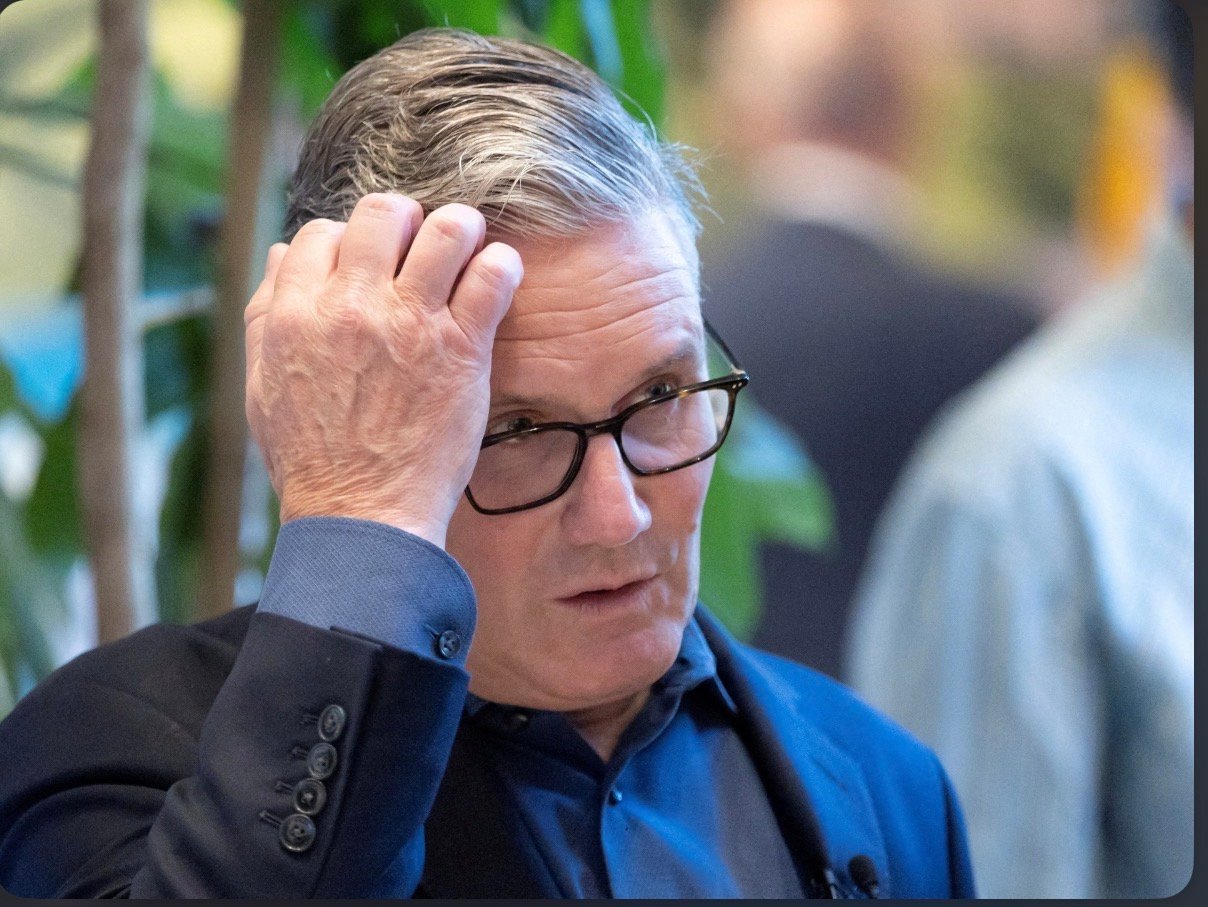
At LAST, Keir Starmer has resigned as British Prime Minister. He threw in the he towel on Monday morning, June 22, 2026, capitulating to an internal party mutiny after less than two years in office.
His tenure, which began with a historic landslide victory in 2024, quickly became defined by bruising policy U-turns, plummeting approval ratings, and a string of damaging political scandals.
An emotional Starmer choked up outside 10 Downing Street as he confirmed his decision to stand down as leader of the center-left Labour Party.
“Every decision I have taken has been about putting the country I love first. That is why I will resign as leader of the Labour Party,” Starmer said, with cabinet ministers and staff looking on.
Starmer announced that the formal process to select his successor will launch in July. He will remain in office as caretaker prime minister until a new leader is finalized, aiming for a completed transition before Parliament returns from its summer recess on September 1.
Starmer’s sudden exit comes fast on the heels of a decisive special election in Makerfield on Thursday, June 18. His main internal rival, veteran politician and former Greater Manchester Mayor Andy Burnham, won the seat to return to the House of Commons. Burnham is scheduled to be sworn in as a Member of Parliament today, clearing his path to launch a highly anticipated leadership bid that he is heavily favored to win.
See also 2025 UTME: Parents, candidates seek total cancellation as JAMB admits errors
The resignation lands precisely one day before the 10-year anniversary of the historic Brexit referendum, a vote that triggered a decade of unprecedented political instability and a revolving door at 10 Downing Street.
While Starmer was initially celebrated for successfully rebuilding Labour from its 2019 defeat into an election-winning machine, his government rapidly lost momentum upon taking power. A series of deeply unpopular domestic policies, ranging from controversial welfare spending cuts to scaling back the winter fuel allowance for pensioners, eroded his core support.
His leadership faced a near-fatal crisis in March over his decision to appoint Peter Mandelson as the UK’s ambassador to Washington. Mandelson’s well-documented personal ties to the late American sex offender Jeffrey Epstein triggered widespread public fury and an immediate rebellion among backbench Labour MPs.
Compounding these internal crises was the rapid rise of the right-wing, anti-immigration Reform UK party. Reform UK’s crushing victories over Labour in May’s local elections ultimately broke Starmer’s grip on power, convincing a majority of his own cabinet that he could no longer lead them into the next general election.
Despite the bitter end to his premiership, Starmer struck a defensive note as he concluded his speech. “I will give my successor my full and unequivocal support, knowing that they will inherit a Britain that is far stronger and fairer than the one I inherited two years ago,” he insisted, before retreating back behind the black door of Number 10.