




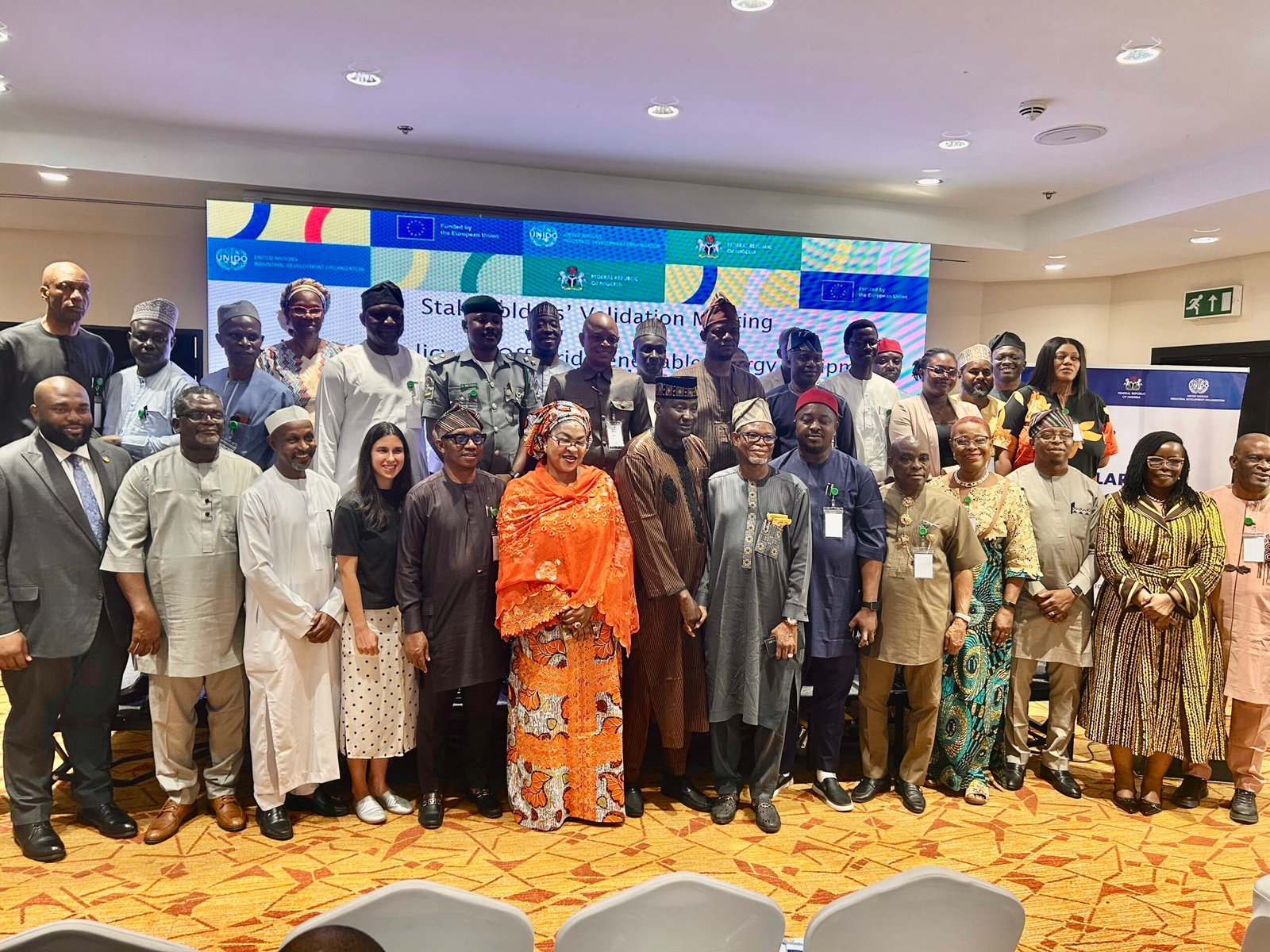
The United Nations Industrial Development Organisation (UNIDO), has pledged commitment to supporting Nigeria’s green and just transition and continue to work closely with government and partners to translate circular economy principles into practical, scalable solutions.
It made the pledge during the opening of Nigeria Circular Economy Working Group (NCEWG), Q1 2026 Meeting Victoria Island, Lagos.
The deliberations during the meeting gives stakeholders including state governments, FG, Nigeria Circular Economy Working Group, partners including the Kingdom of Netherland, European Union the opportunity to share progress, highlight challenges, and identify areas for synergy.
NCEWG was established to promote, facilitate, and advance the adoption of circular economy principles in Nigeria. It serves as a locally driven platform to coordinate the activities of key stakeholder groups in implementing circular economy policies and practices at both national and sub-national levels.
By leveraging economies of scale, the Working Group supports the development of evidence-based policies and bankable circular economy projects that can be replicated across the country, but, it’s still plagued by Funding Gaps: The path to full adoption is constrained by significant funding shortages; Infrastructure required for a robust waste-to-wealth economy which is still in its infancy; Data deficit which hinders accurate planning and impact measurement, and, tech deficit: We face a shortage of local recycling innovations and technology solutions tailored to our context.
Speaking, National Programme Officer, UNIDO, Dr. Osuji Otu, said the Circular Economy Powered Renewable Energy Centre (CEPREC) roadmap provides strategic direction, but its success depends on coordinated implementation across ministries, agencies, the private sector, academia, and development partners and that the strength of the Working Group lies in collaboration, not duplication of efforts.
He added that as a Co-Chair, UNIDO remains fully committed to supporting Nigeria’s green and just transition through programmes on circular plastics, renewable energy, industrial value chains, waste management, and policy advisory support.
“We will continue to work closely with government and partners to translate circular economy principles into practical, scalable solutions. “
Speaking also, Permanent Secretary, Federal Ministry of Environment, Mahmud Adam Kambari, said through collective effort, the Working Group aims to position Nigeria as a regional leader in circular innovation, ensuring that environmental sustainability goes hand in hand with economic growth and social inclusion.
The overarching objective of NCEWG is to support the inclusive green growth of the Nigerian economy through approaches that increase circularity.
He said the objective is not only about environmental stewardship, but it is also to unlocking new opportunities for economic diversification, job creation, and long-term resilience.
Kambari who was represented by Deputy Director in the Federal Ministry of Environment, Dr Nwankwo Livinus Nnamdi said the roadmap is Nigeria’s strategic blueprint for transforming the traditional ‘take-make-use-dispose model into a regenerative and sustainable system which prioritizes resource efficiency, sustainable production, and inclusive waste-to-wealth innovation.
“This is not just a policy document, it is a living framework that guides our collective actions, ensuring that Nigeria’s transition to a circular economy is both ambitious and achievable.
Through this roadmap, we are charting a path where industries reduce waste, communities’ benefit from new economic opportunities, and innovation drives green growth.
Speaking with The Guardian, Anambra State Commissioner for Environment, Dr Felix Odimegwu, said the way out for waste management is to promote a circular economy that can transmit to net zero waste. He said huge budget is needed to handle waste management but most of the state are facing challenges but the most sustainable way out is to have a circular economy agenda on waste.
“Every component of waste at the end of its life should have a new life snd with that, sustainable is ensured because the actors in the value chain will have incentive and at the long run, the nation gets cleaner.
On what the discussion has yielded at the state level, he said: “There has been a lot of improvement. We have proliferation of recycling hubs, last year, Coca-Cola and UNIDO supported the actors.
“We want to see a situation where plastics will no longer block out drainages, without dirty environments. We believe that the environment should be everybody’s business.
When asked about measures in place for implementation, Abia State Commissioner for Environment, Philemon Asonye Ogbonna, said: “One of the ways is to continue to meet and dialogue; the aim is to ensure that it’s implemented in the states.