




Polysmart Packaging Limited have called for the establishment of a national policy on recycling and intense awareness to drive more Nigerians especially youths into the recycling business.
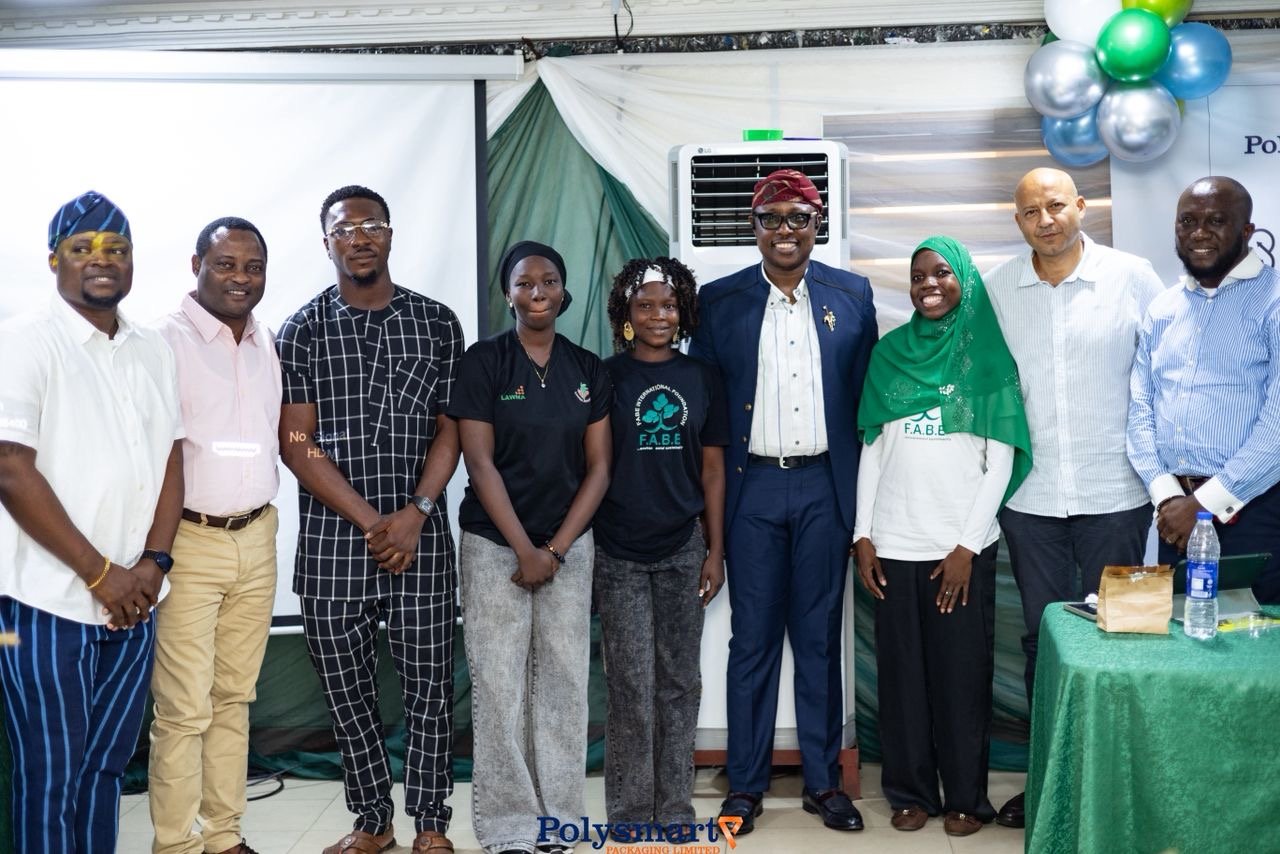
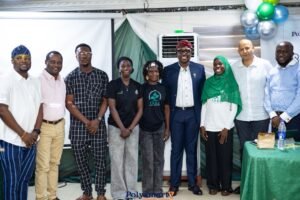
The company made this call during an interview session at its Capacity Development Seminar hosted recently in Lagos in collaboration with Switch Recycling Innovations Ltd., and the Lagos State Recyclers Association.
Ernest Ubasineke, group head, Quality Assurance & Control, Polysmart Group, said that a lot of plastics are being disposed of indiscriminately, calling for a national framework to guide plastic collection.
“We need a national policy and awareness. Currently, a lot of plastics are just disposed of indiscriminately. We don’t have a national framework for collecting plastics. So, different governments across the states have their own plastic waste policy. If we have a national framework around it and build more awareness, there are boxes in the streets for collecting PET bottles which will encourage a lot of people to come into the business because I think the challenging part is the collection itself
“Getting people to go out there and collect these bottles is a big challenge because these bottles are not just sitting down somewhere; they are scattered and littered all over the place and I think is a major issue for young people,” he said.
Ubasineke added that Polysmart is bridging the gap and creating more awareness through its platform making it easier for households to dispose off already used plastic bottles.
“But with what Polysmart is doing, we are creating awareness around that. We have an app where households can just log in, pick a location, and come and submit their bottles. So, we are using that to grow agents within the streets. So, young people can tap into that program and become our agents.”
According to him, any estate in a typical modern urban area like Lagos, can be in charge of collecting all the PET bottles in that location which brings huge financial value.
He said, “ That’s a program we have started. We’ve been running it for four years now. So, those are avenues young people can come in.”
Femi Idowu-Adegoke, SA on One Health to the Honorable Minister of State for Health and Social Welfare, who doubled as an environmental sustainability expert, and waste management professional, spoke on the economic opportunities from efficient PET bottle aggregation.
In his analysis, “ If you look at it daily, in Nigeria, we generate about a million tons—or let’s say we generate about a million tons of PET bottles. Even if it is at 5 Naira per ton, you’re looking at about 500 Naira per ton or per kg. So, we are looking at about 500 million daily on estimate. So, there is an economic value that is standing, and there is a value chain as well.
“ It’s not just the bottle itself that gives you value; there are things that are made from the bottles, and that gives you those values which increase as you climb the value chain.
Adegoke explained that the recycling industry is already a multi-billion industry with less awareness that needs to be more structured.
“It’s already a multi-billionaire industry. It’s just that we’re not speaking about it, we’re not aggregating it, we’re not structuring it. If you give me 1 million Naira now, I will invest it in the collection because if we don’t get the collection right, whatever we want to do along the value chain cannot be right.”
On his part, Taiwo Adewole, Country Manager for Eco-Cycle Plastic, a recycling company based in Lagos State, noted that a lot of credits should be given to those that are at the bottom of the pyramid in the industry which has to do with the consumer.
According to him, “Once the consumer is able to consume and able to segregate from source, then the quality we’re talking about today will be achieved. So, I think the consumer needs to be given the credit. Once the consumer consumes, they are able to make sure the bottles are clean and well-segregated right at their household, instead of finding their way into the dustbin or getting to the waste picker on the road or finding their way into the dumpsite. So, the consumer should be given the credit because they’re the last on the pyramid.
Adewole critised the belief that waste collection is government business and the assertion that Nigeria has no law making it mandatory for Nigeria to separate their waste
“People always believe waste collection is government business. They believe there’s no law in Nigeria that makes it mandatory that everybody has to separate their waste. So, when you talk of waste, they believe waste is meant for the government, even at the local government level.
“They believe the local government is responsible. But now, with what is going on with recycling, with circular economy, and so on, people are now getting to know there’s a value attached to waste. And like I always tell people, waste is not waste until it is being wasted.”
Meanwhile, Wasiu Balogun, Group Managing Director (GMD)of Polysmart Packaging spoke on how Polysmart is positioning itself to drive innovation and growth within Nigeria’s recycling industry?
The GMD explained that they continue to evolve with new innovations as pioneers in the industry that have been active even before regulation comes in which stand them out among the crowd.
“The first thing we did was we had to design our collection system, and the collection system for us is tech-based. So, we have our mobile app where we are able to connect households with our agents, and agents to the branches. So, from the comfort of your house today, you can download our app, request for pickup of your recyclables, and you get paid for it cashless. This is one of the best innovations that has happened in the industry since we started,” Balogun said.
Speaking on business opportunity in PET bottle aggregation in Nigeria, Wasiu lamented that everything about PET bottles in Nigeria or in Africa is still underrated because our PET consumption is in the range of about a million tons per annum.
“We have only three companies right now doing food-grade rPET in Nigeria, and we have another company coming up. But if you look at the impact of what we have done in the last couple of years—three, four years back—you can see that we’re getting a lot of PET bottles out of the ecosystem, but it’s not enough.
“Our collection is still less than 30 percent of the consumption. So, the opportunity to collect is still there, very wide, and also the opportunity to recycle is still there. But it is a high-tech industry, it is an industry that needs a lot of money and a lot of know-how with a lot of patient capital. The opportunity is still wide in collection, sorting, recycling itself—it’s wide. And you can earn a lot of export revenue from that as well.
Meanwhile, the seminar awarded N500, 000 each for Recyclers including Orowole Ogunbayo, Bello Khairat, Amusa Basirat Opeyemi Jewel Jesani to support their recycling business.